
We made it! My heart pounded. Desperate to make our flight to Copenhagen, we sprinted through the Amsterdam’s airport. Ten minutes earlier, we stood still in a long immigration line. I found my calm and whispered to my husband Matt optimistically. “We got this!” He looked at me doubtfully.
I caught the eye of an official and asked for help. Our flight was leaving in fifteen minutes. She verified our boarding pass and lifted up the black stanchion belts. We moved over to the express line. A few minutes later, passports stamped, we ran through the packed airport. I felt like I was in the video game Frogger dodging thousands of travelers.
As I settled in my seat, I noticed the chipper blond-hair bright-eyed flight attendant. She greeted each passenger with a sweet voice and big smile. I said to Matt, “We must be close to Denmark. She’s really happy.”
I know that Danes have a reputation for being the happiest people in the world. I couldn’t wait to find out if that was really true. And if so, why? After three days in Copenhagen, I understood a bit more what all the hype about “Hygge”.

If you’re not familiar with that word, it’s pronounced “hugh-ga”. It’s an attitude or quality of coziness that makes a person feel content and comfortable. It’s pretty trendy and true.
Aside from wearing scarves, reading by the fireplace, and inviting good friends over for a warm homemade meal, I realized after talking to the three Danes I met: Ole, our airbnb host, Bastia our canal boat ride captain and Sylvester, our Danish tour guide that life in Denmark is pretty good because Danish people feel taken care of by their government.
There’s a lack of ego or pretense. That’s true if you are ordinary, political or royal. Their culture values equality and humility. Members of parliament ride their bikes to work. The prince walks his dog in the park. The wealth gap that we experience in the US doesn’t exist in Denmark. There are not a lot of rich families and I didn’t see one un-housed person. The Danes have a lot of national pride. It’s a society filled with beautiful, kind and sensible people.
The transportation from the airport to the old city was simple. The ticket cost less than five dollars. When we arrived and walked out of the station, the first thing I noticed were the sheer number of bikes parked at the station. Unlike Amsterdam a city also filled with bikes and there there was a space for every bike.
Almost everyone bikes in Copenhagen. It’s convenient and the terrain is flat. There are separate bike lanes nearly as wide as car lanes. Bikes are permitted on the metro, bus, and train. Our tour guide, Sylvester said with a smile that he owns three bikes: a commuter bike, a mountain bike and an emergency bike in case one is flat. Most people have two bikes.
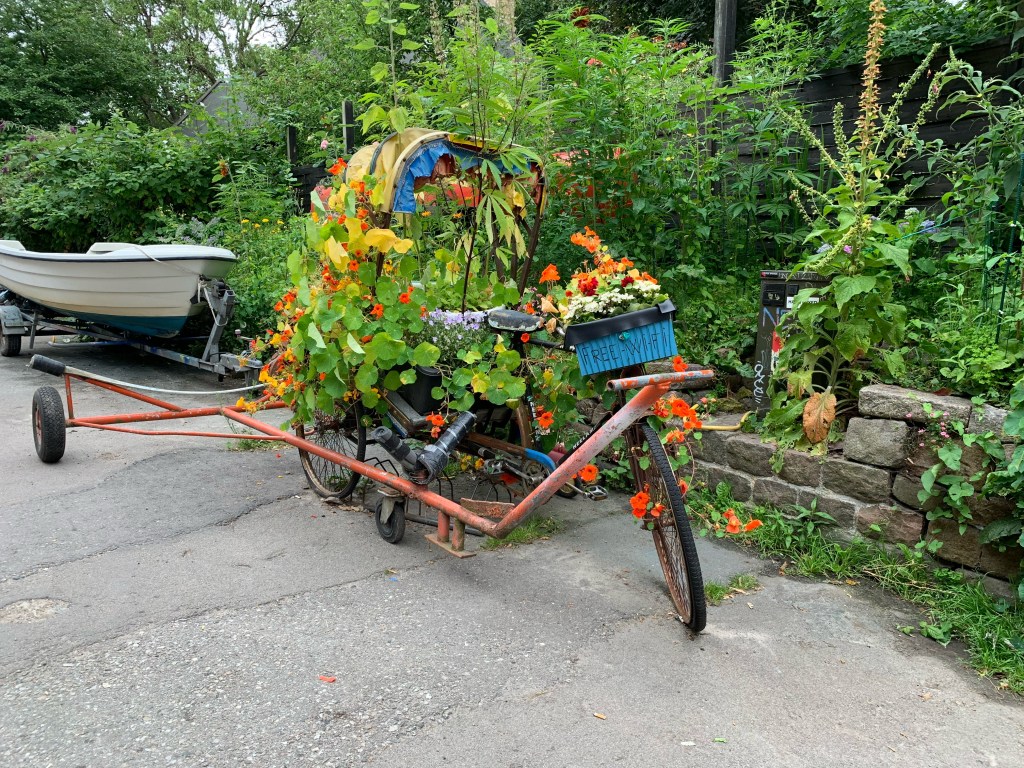
People seemed relaxed Copenhagen. The security they receive from their government allows them to enjoy their lives. About forty percent of income is paid in taxes. While that is high, the money provides a tremendous number of benefits making life smoother and predictable. Transportation, education and health care are known identities. Bastia told us his paycheck is modest and so are his expenses. He trusts the politicians. I didn’t sense a lot of complaining. I saw cohesiveness – and street art. Especially in the FreeTown of Christiania, the world’s largest squatter’s community and international commune.

People living in Denmark don’t worry about being sick or injured. Everyone with a working visa or Danish citizenship has a social security card and a doctor who they call for an appointment or referral. Sylvester broke his arm last winter. He not only had surgery and physical therapy, but was paid his full salary for a month to recover. Being saddled with medical bills or turned away for lack of insurance is a foreign concept to the Danes.
Education and family matter to the Danish. Every new parent receives ten months of paid paternity leave. Men are encouraged to take three or four out of the ten months to to bond with their babies which allows the mamas to go back to work if they chose and know their babies are in good hands The leadership gap in the work place between men and women is less than in the US . Mothers are able to work without worrying about who will take care of their kids.
Childcare is subsidized and even more important, available in Denmark! Their government ensures that there are enough spots for the children at daycare and pay for new facilities if needed. 97% of Danish children go to daycare starting at one years old. Kindergarten begins at three years old. If a family can not afford daycare, the government pays. Sylvester said “those with the broadest shoulders carry the biggest burden.”
The government often pays elders take care of the toddlers before they go to kindergarten. It makes so much sense to give someone who is older a job. I imagine the wisdom and youth transferring between generations. I asked if nannies were popular. Sylvester answered, “only for the very rich.” In Utah, I spend a lot of time with new mamas and I can attest to the stress caused by the lack of maternity leave and childcare. The US has a long way to go.
In addition to health care, maternity leave, and childcare, tuition is paid for by the government. Our guide book said, “university tuition is paid for but not room, board or beer.” The Danes love to drink! Starting at sixteen, teens can go to bars legally to drink beer, wine or spritzers. It is part of their culture.
Another thing I loved about Copenhagen was the commitment to energy efficient housing and building projects. On a boat tour, we saw incredible housing projects. There were containers repurposed as student housing, cement military barracks reclaimed and modernized as well as new “green” construction building apartment complexes for the growing population.
Copenhagen is a city mixed of old and new. Stone churches and statues from the 16th century stand next to contemporary buildings. Flowers, cafes, bakeries and restaurants line the cobble stone streets.
I didn’t hear one horn. I didn’t see any police. Instead, I saw picnic tables, benches and people out in the summer time enjoying life. There’s a lot of laughter in Copenhagen. I loved it. It’s my kind of place. I can see why these people are ranked the happiest in the world.

 Joie de vivre
I love everything about this Sara. I have missed reading your travel stories. You have such a gift with your writing. I agree, Denmark feels very much like your kind of place. The ease, comfort and happiness. The hygge is Sara ❤️
LikeLike
Great post Sara. We were there a number of years ago and had exactly the same reactions to the people. Mom had spent one month there many years ago as a guest.
Kent
>
LikeLike