
When we originally booked our Baltic adventure in 2020, we planned to take a train from Tallinn to St. Petersburg. By 2022, visiting Russia was no longer an option. Instead, Matt suggested that we check out Riga, the capital of Latvia and the largest city in the Baltics.
Not knowing anything about Riga, I started investigating. One travel blogger compared Riga to Paris. Both old cities filled with gardens, cobblestone and World War Two history. Paris boasts over thirty million visitors a year while just over a million visit Riga each year.
I read about Riga’s city market, The Old City and the Art Nouveau District – both designated as a UNESCO World Heritage sites. Intrigued, I looked into the logistics of traveling there from Estonia. Easy. It was only a couple hours by bus. I chose an Airbnb in downtown Riga and was delighted to see it only cost about a hundred dollars a night. The dollar stretched much further in Latvia than Scandinavia – making Riga my kind of place.
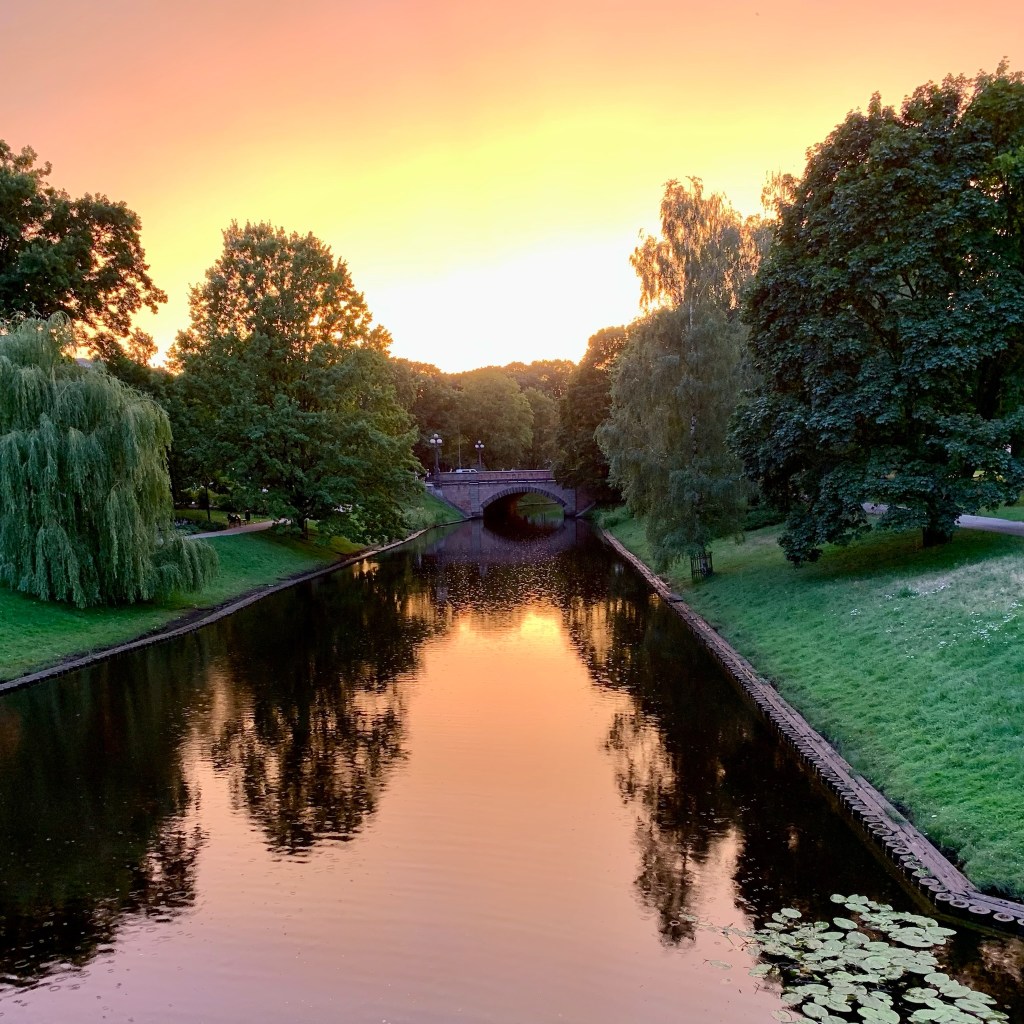
We arrived to Riga on a Sunday. We rode a street car tram from the bus station to the Opera House, which was close to our apartment. From there we walked through a beautiful lush garden filled with flowers, ponds, and fountains which reminded me of Paris’s Luxembourg Gardens. Our clean and cozy apartment was nearby. We dropped our bags in the apartment and headed out for an afternoon of exploration with a tour guide.
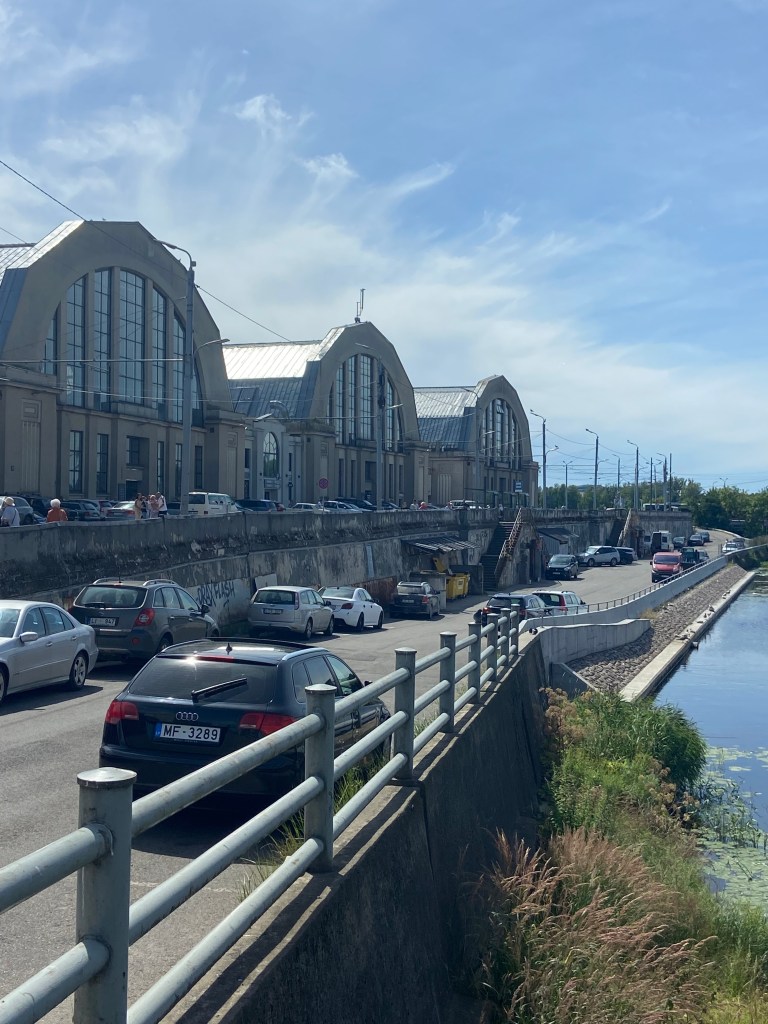
Our tour guide, Liga, met us outside our apartment. We walked straight to Riga’s central market about fifteen minutes away. The market was constructed from 1924 to 1930 using five buildings designed like Zeppelin hangars. The market was built in Neoclassicism and Art Deco style. Inside and outside there is a total of 780,000 square feet with more than 3,000 stalls. The Latvians are very proud of their market. Like Estonia, local people shop at the market year-round. Fresh food is central to their culture – especially in the summer with the abundance of fresh fruits and vegetables. There are also lots of cut flowers of many varieties.


Liga showed us her favorite vendors: a fish merchant, the bread maker, and a sweet baker. We tasted a local pastry and enjoyed an espresso. We walked by the non-perishable good stalls but didn’t stop. Liga told us a story of how some Russian businessmen bribed the authorities to sell Chines knock-off t-shirts, jewelry and handbags. She rolled her eyes at the corrupt bureaucrats who granted stalls to Russian black marketeers. Nevertheless, we left the market satiated and planned to come back the next day to try more local food.
1.8 million people live in Latvia – a small yet mighty country. Latvia joined the the EU and NATO in 2004. This is a controversial topic. Some Latvians appreciate the global connection and security more than others. With Ukraine at war in Russia, our guide said she felt more protected as a result of being a part of NATO and the EU. But many Latvians do not identify with Europe – rather with Russia. We had heard the same thing in Estonia.
Like Estonia, Latvia gained independence from Russia in 1918, and was a free and independent country under a new constitution until 1941. Then, at the beginning of World War II, the Soviets took over and ruled in a brutal manner. The first year of Soviet occupation was so brutal it’s been called the “Year of Terror.“ Thirty-five thousand Latvians were arrested, murdered, or sent to Siberia – most never to return. The night of June 14, 1941, 15,000 Latvians were killed in Siberia. Everyone in Latvia knew someone who had been deported to Siberia.
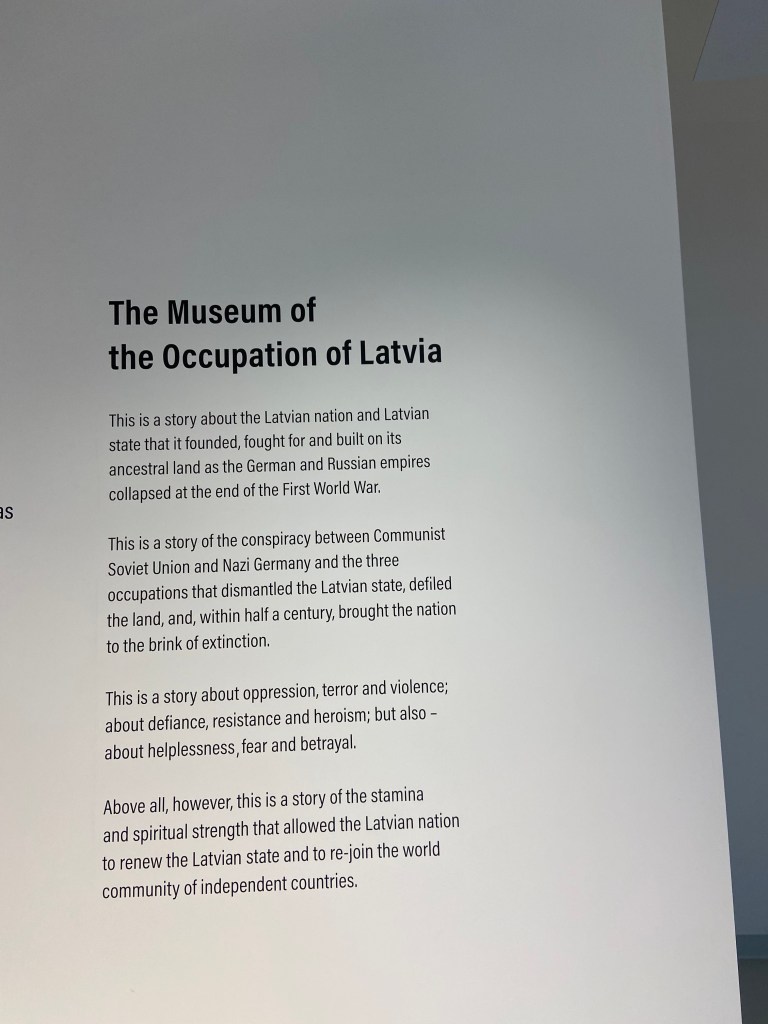
Our guide shared that her great-grandfather and two of his daughters were in Siberia. They were educated and perceived as threats to the Soviets. The only personal item they brought with them was a quilt to keep warm on the train. The three of them lived and worked at a camp for almost twenty years. They barely survived. When they returned to Riga they never talked about their experience, nor did they complain. Liga, our guide said that they felt that the only way they could move forward was by forgiving the Soviets. She said the lesson is forgiveness because if they were not able to forgive, the experience would have killed them. I was stunned and saddened by her personal story. She said everyone from Riga has one like it.
Later in WWII, the Nazis occupied Latvia. The Soviet rule had been so intolerable that many of the Latvians welcomed the Nazis. Can you imagine? That sentiment didn’t last long. When the Germans were losing the war, the Soviets occupied Latvia again in 1944 and ruled until 1991.
Our guide shared with us what life was like growing up under the long period of Soviet occupation. She remembers very strict rules: no jeans, chocolate, and no Christmas celebrations or ornaments. She could not celebrate birthdays or do anything joyous. The only national celebration was the 8th of May, Victory Day. She was forced to walk in a parade and experienced very little pleasure.

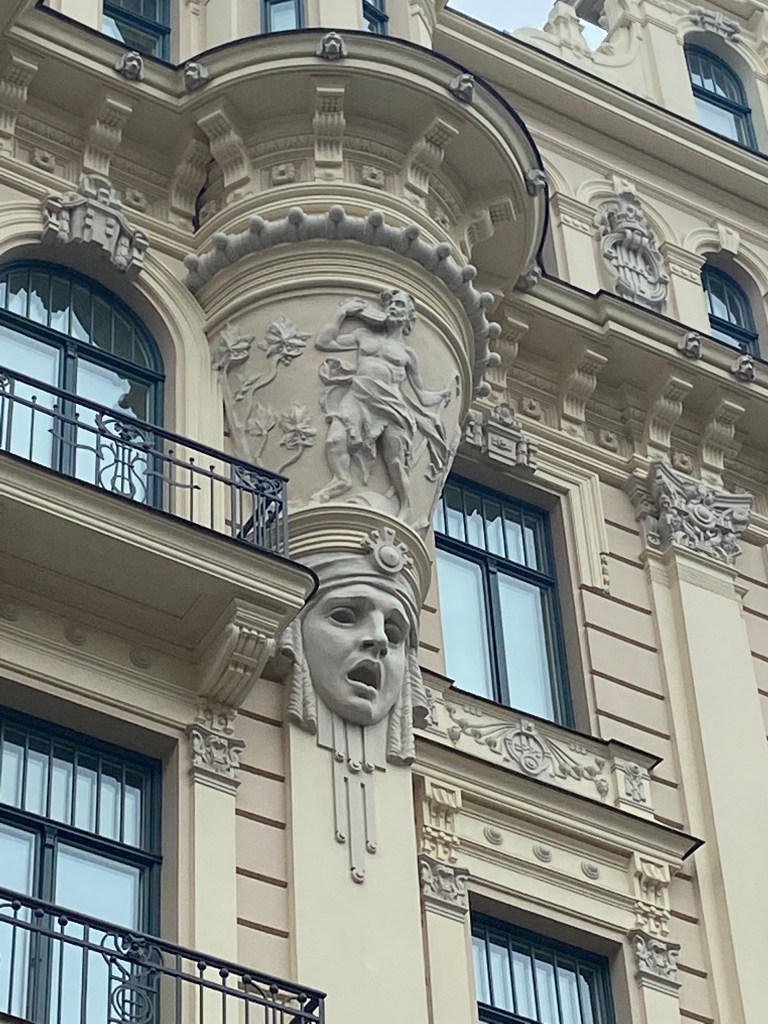
We walked around together all afternoon. We visited the Riga Old Town, which was was founded in 1201 and was a key center in the 13-15th centuries. Cobblestones, churches and the old wall make up the UNESCO designation of the old town. We walked from the Old Town to the Art Nouveau neighborhood which built before World War I from 1900-1914. The architectural style of the buildings reminded me of Gaudí’s work in Barcelona. I was impressed by the beauty and marveled about how little I had known about Riga.

Liga brought us to the Russian embassy, where we saw many upsetting signs to Free Ukraine. A band played in front of a small group of demonstrators. Many Latvians have Ukrainian relatives and are understandably very upset by the violence and war.
On our way back to our apartment, we walked past the Monument to Freedom in the center of Riga. Often the monument is decorated with flowers or candles and symbolizes the core values of the Latvian nation: family, hard work, spirituality and the unshakeable strength of the nation. During Soviet times, the monument was not taken down, but decorating or congregating around the moment was considered a forbidden display of Latvian patriotism, a form of anti-Soviet expression.

At the end of the day, we wished our guide farewell. She was the most amazing of all of our Baltic guides. I really appreciated her grit and self-reliance. She knew that the winter ahead would be difficult with the rising inflation, especially the anticipated increases in the cost of utilities due to the Russian invasion of Ukraine. Yet, she said that since Latvia survived Soviet brutality, they would be fine as long as they were free. I reminded myself not to take our freedom for granted.
That night Matt and I walked around the corner from our cozy flat to a restaurant called Forest and ordered their seven-course prix fixe menu. We ate fresh, interesting and delightful Latvian local dishes and chatted with the lovely server. We loved every bite. We couldn’t stop talking about how much we loved Riga! We walked back to our apartment as the sun was setting after a short rain storm. The rainbows exemplified the a mood of hope and optimism I felt for the Latvians.

On our last day in Riga, we visited the museum of the Riga Ghetto. The museum was a small recreation of the small area in a neighborhood which was designated by the Nazis where Jews from Latvia, and later from other parts of the German Reich, were forced to live during World War II. It was another sobering reminder of the darkest days in history.
Across the street we walked back to the Riga Centra market and explored some more. The afternoon, we walked around the Old City and enjoyed the parks and people of Riga.
On August 2nd, we flew back to Salt Lake City from Riga via Amsterdam. We felt both sad that the trip was over, and delighted by our discovery of the Baltic! Fantastic Trip. Five Stars.















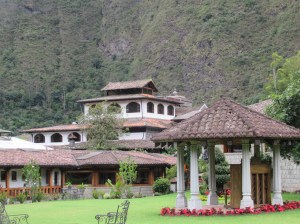
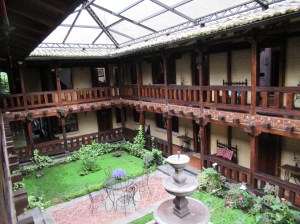 We suspected the resort used to be a monastery because we spotted stain glass windows on some of the wooden buildings.
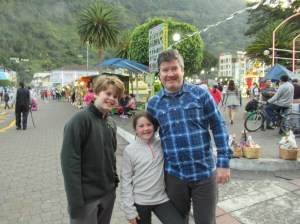






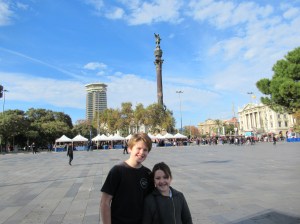 I remembered the view from 2004 when Matt and I visited Barcelona.
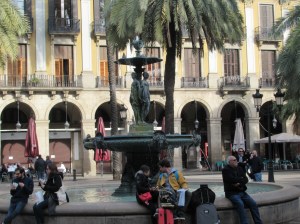 From there, I passed my navigations over to Brewster and he lead us down the narrow windy streets of the Gothic Quarter to our hotel.




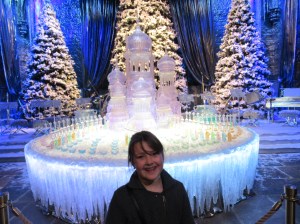 Where to start?! Well, when we got off the train in Watford Junction it was amazing! We walked out to the platform and then the woman said, “are you here for Harry Potter?”
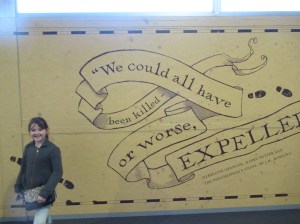 It was amazing. We walked in and I saw some things I recognized and others I didn’t. Then we walked down a long corridor that had some of my favorite Harry Potter quotes.
 I had no idea what it was going to be like so I didn’t really realize that we were going to be on the same set that the actors were on during filming. I then knew what we were going to be doing. I started to know what to expect. Pictures started forming in my mind and then I got really exited.


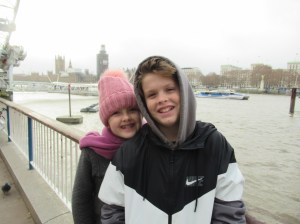 The bridge was packed, packed, packed with people. I don’t think the kids had ever been around so many people. There was a popular gambling game that stopped pedestrian traffic. People bet on which cup covered a ball. At one point, Brewster said, “Mom, that guy just bet 1000 pounds”. No wonder there was a crowd.


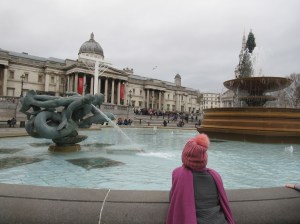 Leister Square, Chinatown and Convent Garden. We had heard that London took Christmas seriously and I didn’t know what that meant until we were there. Lights were strung everywhere often canopying the street. We ran into a Santa pub crawl. I cracked up at the silliness. Street performers and buskers lined every corner. London was alive!


 . There were with no less than twenty thousand other people on the tube. Matt would hate this, I thought. but the tube took us where we needed to go and I didn’t mind being toe to toe with such an international crowd. After Kings Cross we headed home.


 After, we found our way to Chesterford Gardens. After lingering at our red apartment building for a few minutes, we walked down to Finchley road and hopped on a 113 bus which I took everyday to High School. We exited at St. John’s wood and I showed them ASL. It has been renovated over the years, but it was still cool to see.
 She is back in London and works at ASL in development. I was excited to swing by, reconnect and give her a hug. It was WILD! Seeing her after all these years. We laughed: “OK, who are you?? Where did you go to college and how did you get back here?” No time had past. We have a friendship which has not gone away, just paused. Even Brewster and Sadie enjoyed meeting her. After, they had a lot of questions about my high school years. They both know my dear friend Rhodie from London, but she’s pretty much it. We had fun talking about when I was a teen.
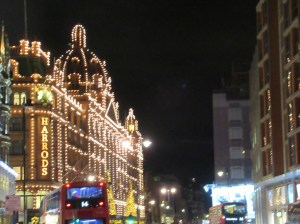 The window displays were gorgeous and we had fun looking at the “SuperBrands” like Gucci, Prada, Dior, Balenciga and especially the fancy people buying them.
 Sadie was taking her time eating and Brewster was ready to leave so he walked home through Hyde Park and took the tube from Marble Arch. It made me a little nervous, but then realized he is nearly the age I was when I lived there. I was out at night all the time. Brewster appreciated the independence. I was happy to received the text that he arrived home and realized that my parents didn’t even have that reassurance. Times have changed. With Brewster gone, I talked Sadie going into “The Vault” next door which was a museum filled with more rock and roll gems. We too walked through Hyde Park, past the Winter Wonderland Carnival, holding hands all the way home.
 The kids slept in. They were exhausted! It was nice to see Polly again and to peek inside the school. I walked through Little Venice to Paddington and back to our flat. We packed up and headed up to Watford Junction for…..(drum roll) HARRY POTTER!


 Joie de vivre